
Dog Stool Score Chart: A 1-7 Guide to Reading Your Dog's Poop
When your vet asks about your dog's stool, "it looked normal" or "it was kind of soft" doesn't give them much to work with. What counts as "soft" to you might be a clinical 4 to one vet and a 5 to another. And "normal" tells them nothing at all.
This is why veterinary medicine uses standardized fecal scoring systems. They replace subjective descriptions with a number - and that number means the same thing to every vet, every time. The most widely used system in clinical practice is a 7-point scale that grades stool from rock-hard pellets (score 1) to entirely liquid (score 7).
Here's what each score actually means, what it tells you about your dog's digestive health, and how to use it at home.
The 7-point stool scoring scale
This scoring system is used globally by veterinary organizations including the WSAVA (World Small Animal Veterinary Association) as part of their gastrointestinal standardization guidelines. It evaluates stool based on moisture content, structural integrity, and overall morphology. When you assign a score, you're giving your vet a standardized data point that slots directly into their diagnostic framework.
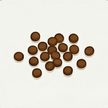
Individual pellets, requires effort to expel. No residue when picked up.

Firm but pliable, segmented appearance. Little to no residue. Ideal.
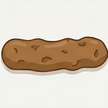
Log shape, minimal segmentation, slightly moist surface. Holds form with slight residue. Ideal.

Log shape visible but very moist. Loses structure when picked up. Start paying attention.

Moist piles rather than logs. Has some texture but no structural integrity.

Has texture but no defined shape. Flat spots or irregular piles.
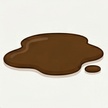
Watery, no texture, flat puddles. Maximum GI distress.
Score 1 - Very hard and dry
Individual pellets, crumbly, requires visible effort for your dog to pass. Leaves no residue on the ground when picked up.
What it means: The stool has spent too long in the colon, with excessive water reabsorption. This can indicate dehydration, insufficient dietary fiber, or reduced gut motility. An occasional score of 1 isn't alarming, but consistent 1s warrant a conversation with your vet about hydration and diet.
Score 2 - Firm but not hard
Pliable, segmented in appearance. Holds its shape completely. Little to no residue left behind when you pick it up.
What it means: This is one of the two target scores for a healthy dog. The stool has good structure, adequate moisture, and reflects normal colonic transit time. If your dog consistently produces 2s, their digestion is working well.
Score 3 - Log-shaped, slightly moist
Maintains a log shape with minimal visible segmentation. The surface is moist and it holds its form, but it leaves a slight residue when picked up.
What it means: Also within the healthy target range. A score of 3 indicates normal digestion with slightly more moisture than a 2. Most healthy dogs on a balanced diet will alternate between 2s and 3s. This is the score you're aiming for.
Score 4 - Soggy, losing form
Still has a log shape, but it's very moist. You can see it holds a shape on the ground, but when you try to pick it up, it loses structure and deforms. Leaves noticeable residue.
What it means: This is the threshold where you should start paying attention. A score of 4 isn't an emergency, but it indicates the stool is moving through the colon faster than normal, with insufficient water reabsorption. A single 4 after a dietary change or stressful event can be normal. Multiple consecutive 4s suggest something is off - dietary intolerance, mild infection, or early-stage GI inflammation.
Score 5 - Pile-shaped, very moist
No longer log-shaped. The stool comes out in moist piles rather than formed segments. It still has some visible texture and holds a rough shape, but there's no structural integrity.
What it means: This is clearly abnormal. A score of 5 indicates significant disruption in colonic water absorption or accelerated intestinal transit. If your dog has one or two bowel movements at this level and then returns to normal, it may be a transient upset. If it persists beyond 24-48 hours, especially combined with other symptoms like reduced appetite or lethargy, contact your vet.
Score 6 - Textureless, flat
Has some texture visible in it, but absolutely no defined shape. Comes out in flat spots or irregular piles. Difficult to pick up without a significant mess.
What it means: Significant diarrhea. At this level, the intestinal tract is not absorbing water effectively, or there's active secretion of fluid into the gut lumen. This warrants close monitoring, attention to hydration, and a vet call if it continues beyond 24 hours or is accompanied by any of the red flags listed below.
Score 7 - Entirely liquid
Watery with no texture at all. Flat puddles. No solid component.
What it means: This is the maximum severity score. The gastrointestinal tract is in significant distress. Score 7 stools cause rapid fluid and electrolyte loss, especially dangerous in puppies, senior dogs, and small breeds. If your dog produces more than one or two score-7 stools, or if they're accompanied by vomiting, blood, or behavioral changes, seek veterinary attention promptly. If you're tracking both vomiting and diarrhea together, our GI tracking guide shows which details matter most.
How to score accurately
A few practical guidelines that will make your scores more useful:
Score the worst part. If a single bowel movement starts firm and ends loose - which is common - record the higher (worse) number. This is the standard clinical instruction: when consistency varies within a single stool, the more severe score is the one that matters diagnostically. Scoring the better portion risks masking a real problem.
Score every bowel movement during active issues. When your dog is healthy and producing consistent 2s and 3s, you don't need to log every one. But when something is off - during a dietary change, after a food indiscretion, during an illness - logging every stool with its score and time creates a dataset your vet can actually use.
Note what's on and around the stool, not just the stool itself. Three additional observations matter as much as the score:
Mucus - a glistening, jelly-like coating or streaks on the surface. The occasional small amount of mucus is normal (the colon produces it as lubrication), but large visible quantities suggest colonic irritation or inflammation.
Blood - and what color. Bright red blood (hematochezia) on the surface or mixed into the stool typically originates from the lower GI tract - the colon or rectum. Dark, tarry, almost black stool (melena) indicates digested blood from higher in the GI tract - the stomach or small intestine. Both warrant veterinary attention, but they point your vet toward completely different anatomical origins.
Straining (tenesmus) - your dog assuming the posture and bearing down with visible effort, sometimes producing very little. This suggests large bowel involvement and is one of the key differentiators your vet uses to localize the problem.
Why the score matters: small bowel vs. large bowel
Your vet isn't just interested in "how bad" the diarrhea is. They're trying to figure out where in the digestive tract the problem originates, because small bowel and large bowel diarrhea have different causes and different treatments.
Here's how the details you track map to this clinical distinction:
Small bowel diarrhea tends to produce large-volume stools at normal or only slightly increased frequency. The consistency is usually watery (scores 6-7). If blood is present, it's dark and tarry. Mucus is rare. Straining is absent. In chronic cases, weight loss is common because nutrients aren't being absorbed properly.
Large bowel diarrhea looks different: small-volume stools at significantly increased frequency, with urgency. The consistency is often semi-formed (scores 4-5). Bright red blood is common. Mucus is frequently visible. Straining is usually present and obvious.
When you hand your vet a log that says "Score 5, small volume, 5x today, bright red blood, mucus present, straining observed," you've just given them a clinical picture that clearly points to the large bowel - and saved them (and your dog) potentially unnecessary diagnostic steps. When you're packaging this for an appointment, preparing for a vet visit with a clear timeline covers what to bring and how to organize it.
When the score should send you to the vet
Use the stool score as one input among several. The score alone doesn't determine urgency - the combination of score, duration, and accompanying symptoms does. If vomiting is in the picture too, what to track when your dog has vomiting or diarrhea pairs with when to call your vet for urgency.
Contact your vet if:
Any stool score of 6 or 7 persists for more than 24 hours. The fluid loss at these scores adds up quickly.
Your dog has 4+ bowel movements in a day at score 4 or above, when their baseline is 1-2 per day. It's the frequency increase combined with the consistency change that matters.
You see blood of either color - bright red or dark/tarry. Blood always warrants at least a phone call to your vet, regardless of the stool score.
Diarrhea of any score is accompanied by vomiting, loss of appetite, lethargy, or behavioral changes. GI symptoms in isolation are one thing. GI symptoms combined with systemic signs suggest something more significant.
Your dog's stool scores have been trending upward (worse) over several days, even if no single day looks alarming. A pattern of 3 -> 4 -> 4 -> 5 over a week tells a story that a single snapshot doesn't.
Seek immediate care if:
You see signs of dehydration - dry gums, skin that doesn't snap back when gently tented, sunken eyes, or significant lethargy.
Your dog is a puppy, a senior, or has a known health condition. These populations decompensate faster and have less physiological reserve.
There is profuse, unrelenting diarrhea combined with vomiting. The dual fluid loss pathway is dangerous.
Building the habit
The stool score is most useful as a longitudinal record, not a one-time observation. A single score tells your vet what happened today. A week of scores tells them whether things are getting better, getting worse, or cycling - and that trajectory is often more diagnostically valuable than any individual data point.
If your dog is on a dietary trial, recovering from illness, taking new medication, or managing a chronic condition, daily stool scoring becomes essential clinical data. During an elimination diet trial, for instance, a gradual shift from 4s to consistent 3s over six weeks is the kind of evidence that confirms a food-responsive condition - but only if you tracked it.
You don't need anything fancy to start. The back of an envelope works. But if you want scores timestamped, trended over time, and exportable into a report your vet can read in 30 seconds, that's exactly what Vetara's structured stool logging was built for - complete with the 1-7 scale, flags for blood, mucus, and straining, and automatic inclusion in vet-ready reports.
The important thing is that you score consistently and honestly. Your dog's poop is trying to tell you something. A number makes sure the message gets through.